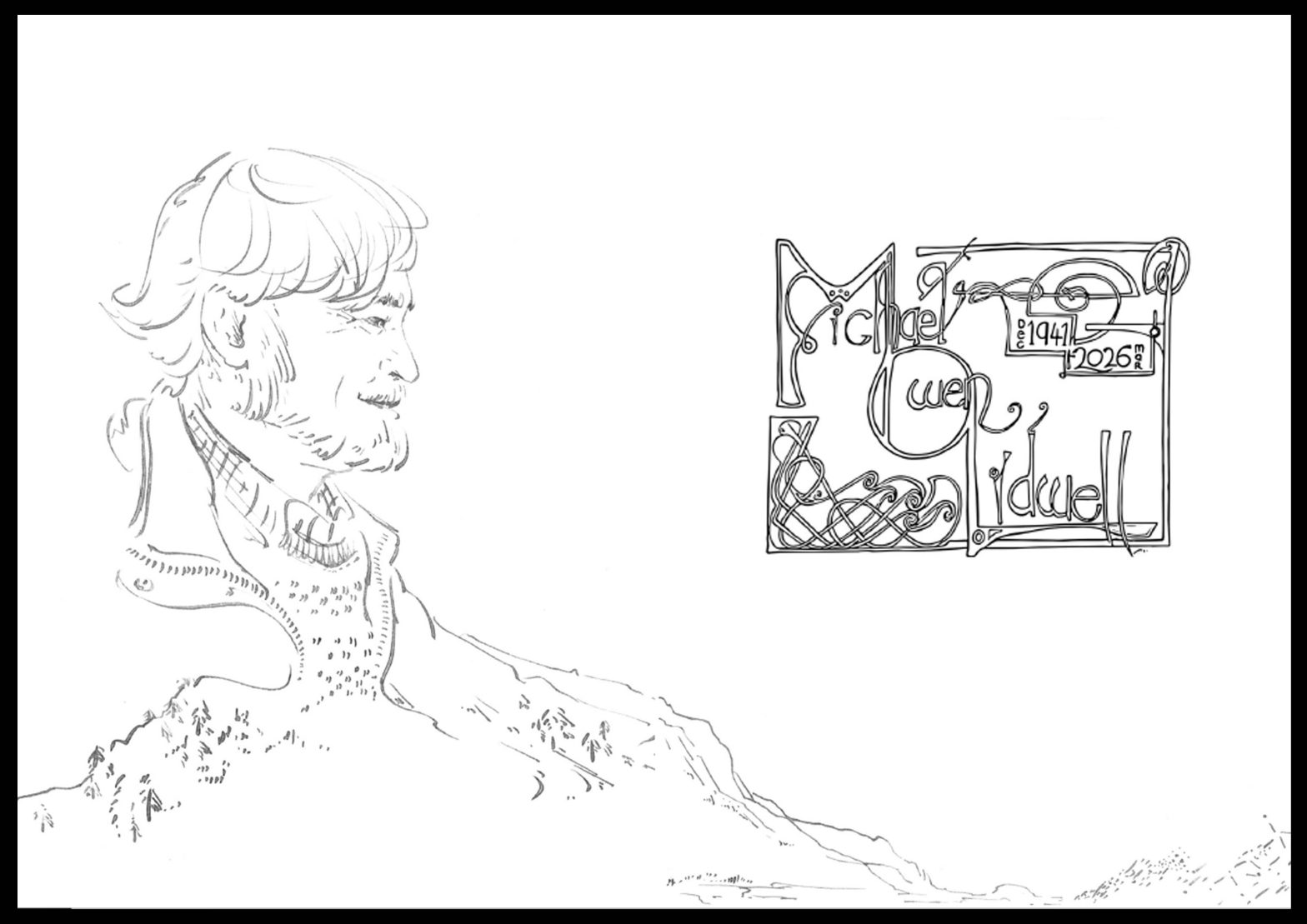
This has been a busy week. We held a funeral for my Dad. This post is a collection of some of the memories. He has set sail across the sundered sea, where one day I will join him. Until then I will continue to work away at what I see in front of me.
If you would like an insight into what has inspired wordsmith crafts, read on. The funeral was a whole family creative affair. It involved selecting photos, original artwork, flowers, and words. I have included links for those who would like to go beyond this post, which is largely a personal response.
He will be missed and remembered on the water in the hills and in our hearts”
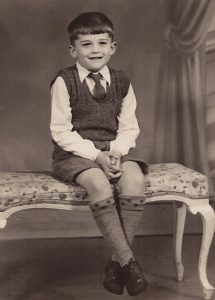
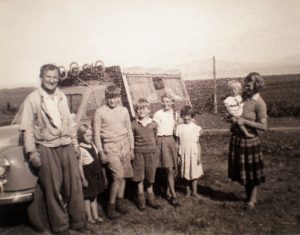
My father was born in Witney hospital, evacuated to near Oxford in 1941 during a time of war. So, despite living in the pre-evacuation hospital location in Hampstead, his dad cycled the 24 miles to Oxford where he was able to stay in a college room at Balliol since he was a scholar. It is worth bearing in mind that this was in the winter at Christmas, as he was born on Christmas eve, the day before his mother’s birthday. Perhaps he saw it as an opportunity to use frustration to develop character. The stories my Dad told me of his earliest memories from this time were of growing up in his parents’ house in Hampstead, and also of the countryside. A combination of sleeping under a big iron table, a Morrison shelter, in London and of preserving farm eggs collected when they visited his mother’s rural home at Fursdon house. His wartime diet meant that he also never developed a taste for bananas. The table made a lasting imprint when he banged his head on it. Deeper still though was the love of the land which he inherited from his parents, both Owen and Jenefer. This left a deep impression which he has passed on to us.
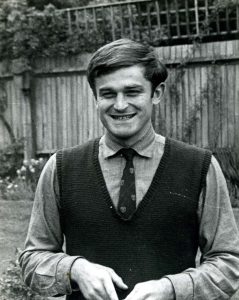
Everyone who has met him will be aware that he was not a man to boast about his achievements. These were many and diverse. His parents’ academic prowess meant he set a high bar for himself. He was able to follow in their wake to university and also to pursue a keen interest in activities such as scouting (A Queens Scout) and sports (Many!). His intellectual aptitude with Mathematics was combined with hands-on skills. Possibly from a childhood spent designing and sewing his own tents as part of a DIY family. Perhaps his sense of resilience and adventure was gained from travelling off the beaten track with his family around Europe, Scandanavia, and the Ardnamurchan peninsula.
After gaining his degree from Oxford, like his father and mother, he looked for a job. Despite his comment that “A career in optics was far from my thoughts. I had a passion for painting, with a romantic attachment to natural or mountain scenery and was dabbling with photography” He settle on the challenge presented by lens design. This led him to take up an opportunity in Glasgow.
This involved working at the beginning of infra-red technology and computer aided design. Not just designing products, but the systems used to develop the technology. Barr and Stroud, his lifelong employer, supported him through a master’s at Imperial College London testing Infra-red imaging systems. This was the academic institution he returned to for annual meetings with colleagues, presenting papers and discussing optical topics.
The proximity of the factory to the canal tow path, where he could take lunchtime walks by the water, was probably not the only reason he remained with Barr & Stroud throughout his career. Dedication to providing stability for his growing family, and an early discovery of “the Blue train” to Helensburgh, Balloch and the hills were also a strong influence. Barr & Stroud worked with Glasgow university to develop computers, and our dad wrote software routines which could run calculations that previously involved a whole room of slide rulers. As the company business model changed, he gained the kudos of publication. He presented results at international conferences allowing travel abroad. He was therefore published, and you can still look up his papers in the Society of Photo-Optical Instrumentation Engineers (SPIE) digital library. He was even addressed as Dr on occasion, which is understandable if not formally recognised, given the level of research he carried out. He is also credited on two patents. One as the sole designer. I appreciate having had the opportunity of an encounter with his professional world in my adult life, at his retiral celebration. The respect and affection his colleagues had for him was obvious both in their conversations and the novelty custom hat they designed to block annoying bright light and sounds in the new open office. My memories of the factory at Anniesland otherwise would have mostly consisted of memories of works Christmas parties as a child, or half understood stories of parallel servers and c-shells.
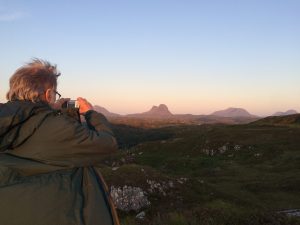
Having discovered that Glasgow is not only a deer green place in its own right, but also a gateway to the mountains he made the most of this throughout his life. He
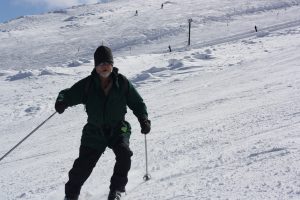
“ Learnt to ski by perseverance and was introduced to the heady winter atmosphere of Strathspey, white snow hills against the dark green pine forests. Later I bought skis and camped out, aspiring to communion with nature and to become a hard man immune to the weather, fired by stories of the Creag Dhu.”
He was a fell runner and as part of Dumbarton Amateur athletics club he is credited with planning and running a relay race from Glasgow city centre to Fort William. It took their team 11 hours, 3 minutes and 44 seconds. With Dad having planned the route and running the mountain stage “like a young stag”.
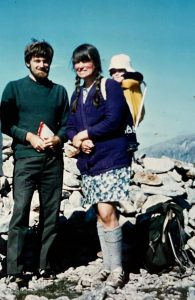
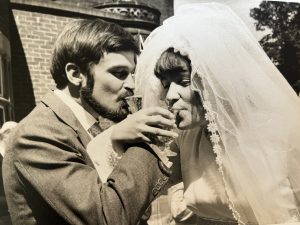
It was also in the Hills that he met Naomi. Whilst camping in the Cairngorms with a friend they visited a hotel for dinner. There he met our mum, who was shocked to find out that he was sleeping in a tent in the hills. Their relationship developed over more dinners back in Glasgow when he would call in to see her after volunteering. Over the following years she supported him climbing all 540 tops and walking the breadth of Scotland. They both also carried us up many of those hills until we were able to walk them ourselves. He also frequently assisted us like an extra electric motor when our energy levels waned on cycling trips.
It was not just the mountains he was drawn to though. He wrote about his over adventurous introduction to boating in 1948. Whilst staying with his family at Solvang in Norway he set out on his own and was rescued from a drifting boat Myself and Aline had a similar experience on Loch Ard when trying to row a wee “Argo” with no rowlocks. This did not put him, or our family, off learning to sail. We spent many hours exploring the loch over the following years.
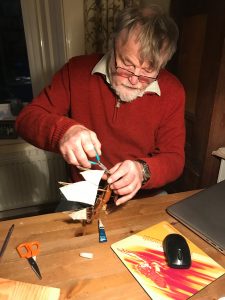
Just as our mum supported him in running and hillwalking, he supported her in voluntary work with Scripture Union Camps. As his children began to leave home, he used the experience he had built up teaching us to introduce many more children to the joys of messing around in boats. He also undertook the task of helping maintain the SU “broadreach” boats. He taught sailing skills as well as optimising his own enterprise dinghy to race competitively and help him seek out the variations in the winds that blow down the hills. A physical challenge to complement his mathematical tracing of infra-red ripples at work.
He has consistently supported the Church with a deep faith that should not be overlooked. Like the beauty in the heather on the hillsides and awesome sight of snowcapped hills it was obvious to those who looked for it, but he would leave enquiring minds to find out about it, rather than present his beliefs unasked. Whilst he did lead teaching sessions his main contribution was hand on and practical. At a basic level he repaired the lead in windows and practiced everyday love God through loving his neighbours. He was also very supportive of those in positions of leadership of congregations he belonged to, especially while at St Silas church in Glasgow during its transformation in the 1980’s
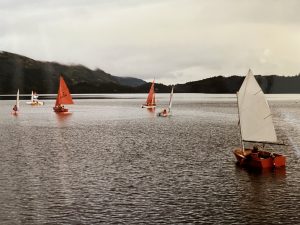
When he moved to Kilcreggan in the 1990’s his sporting ambitions increasingly involved sailing. He raced in the ‘solo’ travelling series, as well as on the Gareloch with friends from the Royal Northern. True to his generous nature he also volunteered with cadets at Cove and Kilcreggan sailing club. After maintaining the family home in Jordanhill, and an allotment in Scotstoun, (Which was great for November fireworks and birthday parties) he continued to pursue his love of gardening in Oaklea. When we returned home from the various parts of the world we had scattered to, we were often welcomed with home grown vegetables, if he had managed to defend them from the deer. He built a conservatory against the wall to nurture a growing vine, which produced grapes. He carved the name of the house into the gates and battled moss on the lawn to make it smooth enough to play croquet. A game which he was cunning and crafty in playing.
He has probably walked almost every inch of the peninsula and wrote guides to walks throughout it and the surrounding glens. These add to a large collection of his and his father’s note books. Long before the era of lifestyle bloggers he climbed and skied in the Atlas Mountains and cycled solo through France. He skied from Oslo to Bergen while me and Aline took the train with our mum. The written accounts of many of these journeys combined with his paintings to make a rich library of experiences going back to his childhood. As well as print copies of his work we have also inherited the publisher versions. Frustratingly, considering that he was someone who could wire a new button into the keyboard of a computer when it didn’t carry out a function he desired, the format he worked in is now obsolete and it is left to us to convert the files into a new format.
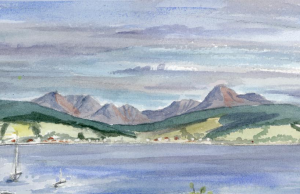
As well as on the water and in the mountains, he is remembered in our hearts. Although consistently described as kind, and a gentleman, he also took gleeful delight in seeing our reactions as he expanded the boundaries of what we felt was safe . For example, when the wind gusted and the boat we were in heeled over. He showed us that leaning out of the boat is the way to find an even keel, rather than hunkering down in the bilge.
He encouraged us to set consistently adventurous targets. Climbing mountains, and skiing on them when there was snow or finding a sheet of ice to practice using an ice axe on when there wasn’t enough snow to ski. He returned to “The Lidwell rock in Ardnamurchan” and we would spend holidays living in tents learning to cook over an open fire. He even towed the mirror dinghy, Heffalump, to sail in Fascadale bay. He gave us the freedom to pursue our interests and develop unique characters.
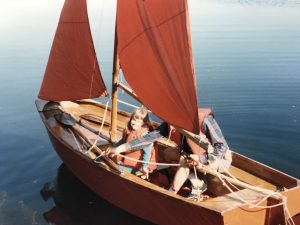
If we faced mathematical problems he would help but also use the opportunity of a simple exercise to open our minds to the intricacies of ray tracing. Walks in the hills were also lessons in history and geology. Map reading was the start of enquiries into the meanings of the names of things and the rich linguistic tapestry of the modern, and ancient, landscape.
He was constantly adventurous himself, not simply racing around the lochs near home, but also taking part in an expedition to sail to Bute and windsurfing from various beaches. On one occasion having windsurfed too far out to easily return to his launch point of Tayinloan he decided to carry on and catch the ferry back from Gigha.
He loved to travel. Driving us down to the south of England to keep in touch with our extended family. Or putting the car on the train, sharing sleeper cabins, and climbing trips in Norway. From Bogwat on the Fursdon estate, to the Jotunheim mountains in Norway we will miss and remember him.
He has passed on his passion for painting, creation and creativity in general to all of us. He loved sketching in the hills, developing photographs in the dark rooms he built, or working with carving wood. We have all applied this in different ways, but if you visit any of our houses there is a silver thread of “Lidwell” style to be discovered. Perhaps you can catch a glimpse of it when you look at the order of service you are holding. Like our father though, you will need to sense beyond immediate impressions to discover the underlying spirit which it makes tangible.
Something which we invite all of you to do, whether you are gathered with us today in person, or online.
You can read the version of this composed and read by myself and Aline on the day of the funeral here:
And a digital version of the service book containing art by Rebekah here:
And here is a link to the service itself which will be live for a while.
Lovely words and insight about such a generous kind man and indeed the whole family, reading this brings back such fond childhood memories thank you to Naomi, Michael and the family for all your kindness and sharing with us in your Neighbourly care and involving us in your lessons in adventure.